

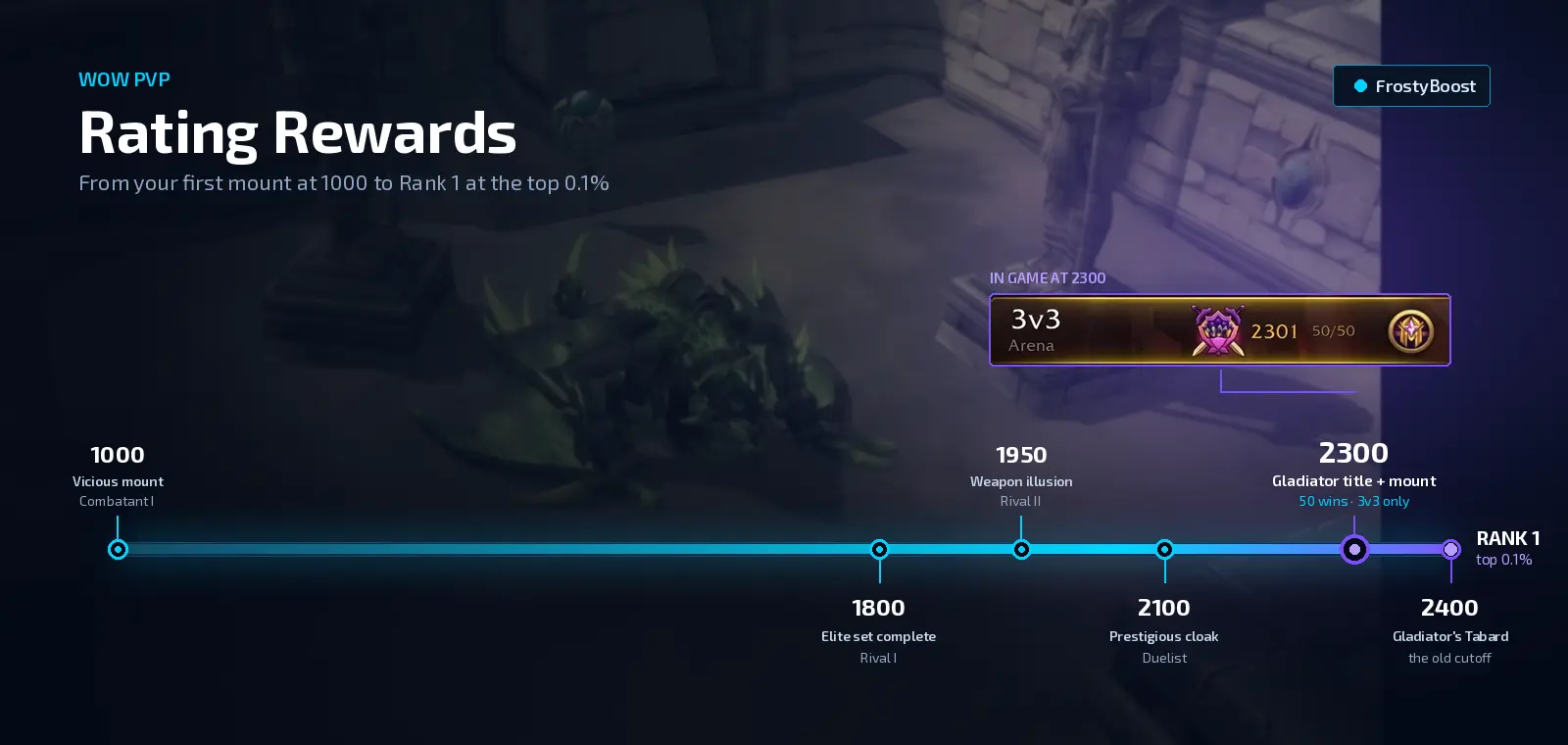
The WoW PvP rating system hands out a reward at almost every step of the ladder: your first Vicious mount at 1000 rating, elite armor pieces through the brackets, a weapon illusion at 1950, and the Gladiator title with its seasonal mount at 2300 rating plus 50 wins. Above all of it sits Rank 1, reserved for the top 0.1% of each ladder. This guide walks the whole ladder from bottom to top: how your rating actually works, what unlocks at every threshold, and where the real walls are.
 ⤢ Click to enlarge
How the Rating System Works: CR vs MMR
You have two numbers, and only one of them is visible. Current Rating (CR) is the number on your character sheet, the one rewards check against. Matchmaking Rating (MMR) is the hidden number the game uses to pick your opponents and decide how much CR you gain or lose per game.
The relationship between them explains almost every confusing moment on the ladder. Winning against a higher-MMR lobby pays out big CR gains; losing to a lower one takes a big bite. When your MMR sits well above your CR, you gain more than you lose and climb fast. When the two converge, every game turns into a coin flip worth roughly the same in both directions, and that is where most players feel “stuck”: the system has simply caught up to where it thinks you belong. Breaking that wall means genuinely outplaying your bracket, not grinding more games at the same level.
 ⤢ Click to enlarge
How Rating Gains Actually Work: The Math Behind the Numbers
The gain and loss numbers after every match look random until you know what the system is doing. It runs on a handful of rules, and once they click, most “why did I only get 8 points” moments explain themselves. One honest note before the numbers: Blizzard has never published the exact formulas — the math lives server-side. The values below are illustrative, but the magnitudes and the logic are what the ladder actually shows.
The Starting State: 0 CR, ~1500 MMR
Every character opens a rated bracket at 0 visible rating — but the matchmaker doesn’t treat you as a zero. A fresh max-level character gets placed at roughly 1500 hidden MMR. That 1500-point gap between what you see and what the system believes is the single most important number in early climbing, because of the next rule.
Rule 1: Your CR Is Always Chasing Your MMR
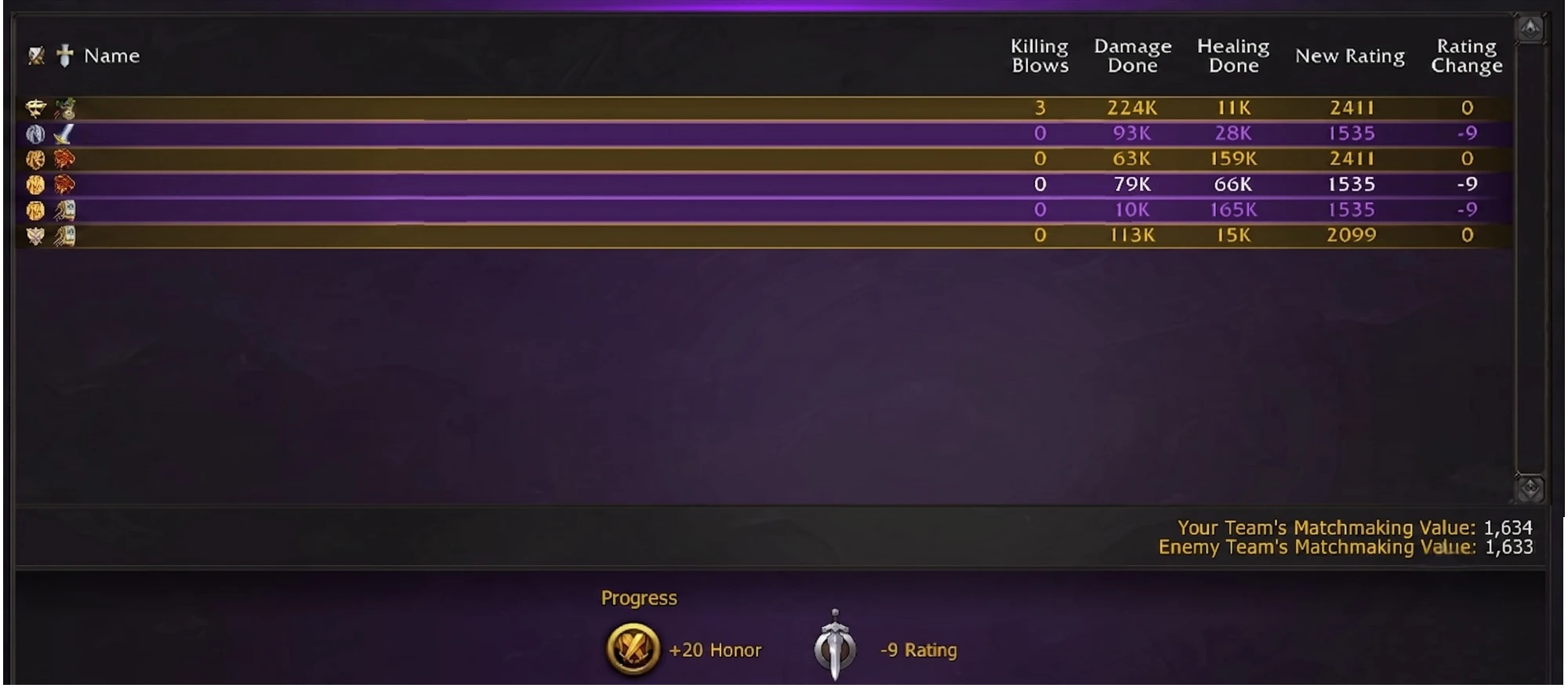
The game constantly pulls your visible rating toward your hidden one, and the size of the gap sets the size of the payout. Here’s the classic first rated win of a fresh duo against an equal-MMR team:
| Before the match | After the match | |
|---|---|---|
| Winning player | 0 CR / ~1500 MMR | ~130 CR / ~1515 MMR |
| Losing player | 0 CR / ~1500 MMR | 0 CR / ~1485 MMR |
Two things in that table run the whole system. The winner’s MMR moved by a normal step, around 15 points — but the CR jumped by 130, because the system is rushing a 0-CR player toward their 1500 MMR. And the loser’s CR stayed at zero: visible rating can’t go negative, only the hidden number eats the loss.
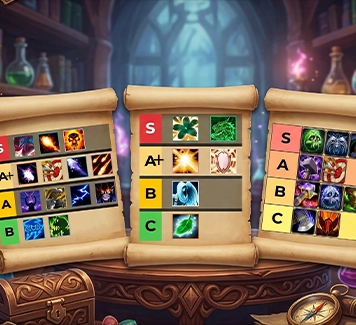
Keep winning and the chunks shrink: 130, then 90, then 60 — until CR hugs MMR and both start moving together in ordinary steps. From that point, bigger gains per game require the MMR itself to climb, and MMR at your level is a spec question as much as a skill one — our WoW PvP tier list shows which specs the ladder currently favors in every bracket.
The same logic works as a 2×2 matrix, and it covers every “weird” number you’ll ever see on the score screen:
| Your position | You win | You lose |
|---|---|---|
| CR below MMR | Big CR gain — the system is catching you up | Tiny CR loss |
| CR equal to MMR | Standard gain, tracks your MMR change | Standard loss |
| CR above MMR | Small gain | Heavy loss — the system is pulling you back down |
Rule 2: The Opponent Sets the Price
The baseline MMR swing for beating a team at your own level sits in the mid-teens. From there the gap between the two teams scales everything. Beat a team sitting 300+ MMR above yours and the reward roughly doubles; the ladder pays a surplus for upsets that grows with the distance. Farm a team 400 below you and the win pays single digits. Losses mirror it exactly — losing to a stronger team costs little, while dropping a game to a team far below yours is the most expensive single result the ladder can hand you.
A concrete pair of matches shows the spread. Your duo queues at ~1700 MMR. Game one lands an even 1700 lobby: the win pays the standard ~15 MMR. Game two catches a 2050 lobby having a bad night: that win pays around +30 MMR — one upset moved your hidden number as far as two ordinary wins. Now reverse it: if that 2050 team had beaten you, their reward would be scraps and your loss nearly painless. The ladder always prices the same game twice, once for each side.
Rule 3: You See Team MMR, the Game Uses Individual MMR
The number on the match scoreboard is your team’s average MMR. Your personal MMR stays hidden, and that’s the one deciding your gains — each player’s payout is calculated from their own CR-to-MMR gap, not the team’s. That’s why two teammates can win the same game and collect completely different rating:
| Before the win | CR gained | Why | |
|---|---|---|---|
| Player A | 1450 CR / 1600 MMR | ~+85 | 150-point gap — the system is still catching them up |
| Player B | 1590 CR / 1600 MMR | ~+18 | CR already at MMR — standard rate only |
Same team, same win, four times the payout — and nothing unfair happened. One quirk worth knowing on top: the MMR change from a match shows up in your next game, not on the score screen of the one you just finished. The “stale” number confuses more players than any other part of the system.
Rule 4: Streaks Move MMR in Chunks
Long win streaks are widely observed to add extra MMR on top of normal gains — around the fourth consecutive win the system starts pairing you up noticeably faster, and loss streaks do the same in reverse. Blizzard has never confirmed the mechanic, so treat this one as ladder folklore with a lot of evidence behind it. The practical half is unambiguous either way: requeuing through a losing streak drags your hidden number down and hands you harder recovery — the mathematical version of the tilt tax we describe in our RBG and Blitz guide. Three losses in a row is the signal to stop, not to queue harder.
Every PvP Rating Reward in the Current Season
The reward ladder follows the same structure every season: armor pieces through the lower brackets, cosmetics with real prestige from 1950 up, and the title everyone recognizes at the top. Here is the full lineup.
| Rating | Rank | Reward |
|---|---|---|
| 1000 | Combatant I | Elite cloak + the seasonal Vicious mount for rated wins |
| 1200 | Combatant II | Elite legs and bracers |
| 1400 | Challenger I | Elite gloves and boots |
| 1600 | Challenger II | Elite chest and belt |
| 1800 | Rival I | Elite shoulders and helm, completing the set look |
| 1950 | Rival II | Seasonal weapon illusion |
| 2100 | Duelist | Prestigious Cloak |
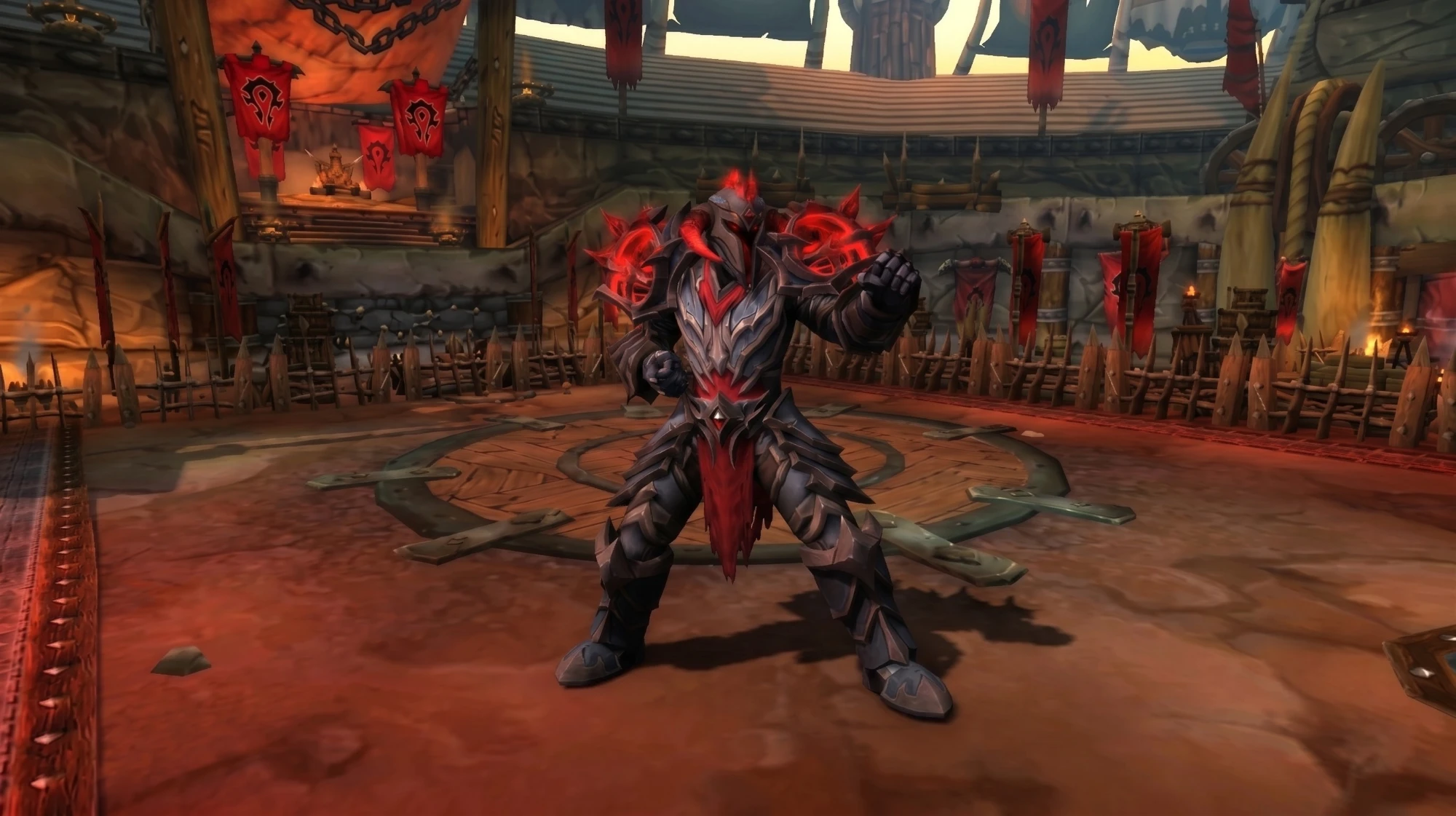
| 2300 | Elite | Elite rank + Gladiator’s Tabard |
| 2300 | Gladiator | Gladiator title + seasonal mount, with 50 wins at this level |
| Top 0.1% | Rank 1 | Permanent seasonal R1 title |
 ⤢ Click to enlarge
The Vicious mount at 1000 comes from rated wins at that rating and changes each season; the current one is covered in our Midnight seasonal mounts guide. The Gladiator mount at the other end has its own twenty-year history, catalogued season by season in our list of all 42 Gladiator mounts.
Gladiator: How the 2300 Threshold Actually Works
Gladiator requires 2300 rating and 50 wins at or above that mark, in 3v3 only. This flat requirement replaced the old system where the title went to the top 0.5% of the ladder with a cutoff that moved every season. The bar no longer moves, but holding 2300 through fifty victories, while every loss threatens to drop you back under, remains one of the hardest sustained challenges in the game. We break down the climb, the tactics and the honest difficulty in our guide on how hard it is to get Gladiator.
Picking the right spec matters more here than anywhere below: at cutoff level the meta stops forgiving off-meta choices.
Solo Shuffle: Its Own Rating, Its Own Legend
Solo Shuffle runs on a completely separate rating, with the same reward brackets for armor and cosmetics, and its own top prize: the Legend title at 2300 rating with 100 round wins at that level. Shuffle progress never counts toward Gladiator, and the Gladiator mount cannot be earned there, which surprises more players than any other rule in rated PvP.
Because rounds, not matches, decide your rating, Shuffle climbs feel different: one lobby can swing you six rounds up or down, and healers carry both the longest queues and the strongest per-game influence. If the Legend track or a specific Shuffle rating is your goal, our Solo Shuffle Boost covers it round by round.
Rank 1: The Only Percentile Left
Rank 1 goes to the top 0.1% of a ladder at season end, and it is the only reward that still works on a percentile. There are three separate R1 races each season: Rank 1 Gladiator in 3v3, which requires 150 games won during the season, Rank 1 Legend in Solo Shuffle at 50 games won, and the Battleground Blitz equivalent on its own ladder. Unlike every seasonal title below it, R1 is permanent: it stays on the character forever, which is why the last weeks of a season above 2700 turn into the most cutthroat games in WoW.
For players chasing the permanent title rather than the seasonal mount, our WoW Rank 1 PvP Boost runs with actual R1 veterans in both 3v3 and Shuffle.
Battleground Blitz: The Third Ladder
Blitz is the newest rated mode and runs its own full ladder with the same rating brackets, separate from both Arena and Shuffle. It has exclusive seasonal titles, including its own top-0.1% permanent rewards, and its rating touches nothing in the other two modes. A solo player can realistically push all three ladders in one season, each with its own reward track.
How to Actually Use the Ladder
- 1800 is the value peak. The full elite set look completes at Rival I, which makes 1800 the most rewarding single target for most players, everything after it is prestige, not appearance.
- 1950 and 2100 are quick hops from 1800. The illusion and the cloak sit close enough above the set that stopping at 1800 usually means leaving two rewards on the table.
- 2300 is a different sport. The gap between Duelist and Gladiator is bigger than the 200 points suggest, because everyone left on the ladder there is fighting for the same 50 wins.
- Check your MMR before grinding. If your MMR sits above your CR, keep queueing, the climb is paid for. If they have converged and you are losing every other game, more games will not move you; better play will.
The fundamentals that actually move rating, positioning, cooldown trading and macros, are collected in our WoW Arena guide. And if you want a specific number on the sheet without the season-long grind, from 1800 for the set to a 3v3 rating push, every bracket on this page is available as a carry.