



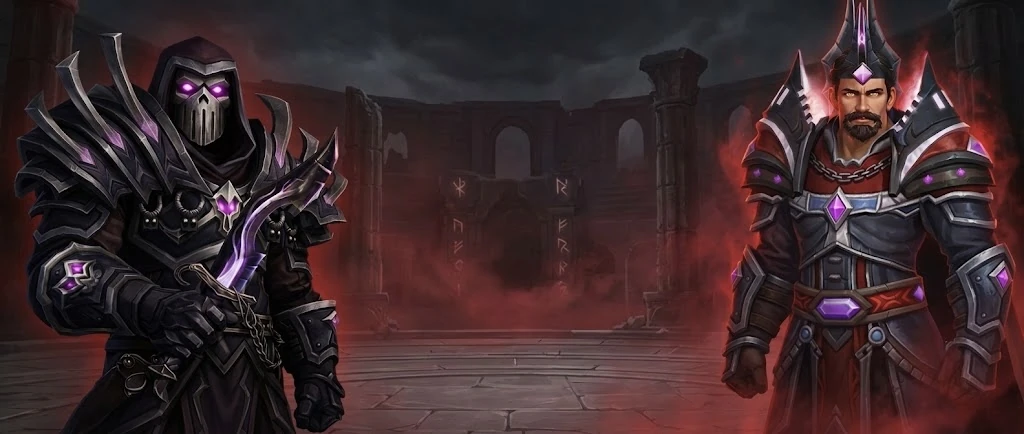
Here’s what makes TBC arena unusual: the comps that dominate 2v2, 3v3 and 5v5 on day one of a fresh season are, for the most part, the same ones on top when it ends — and that’s held from original TBC through every re-release since. So if you’re rolling into TBC Anniversary (Fresh Classic) and wondering which setup to commit to, this guide stays accurate the whole way through. No patch chasing, no rerolling every few weeks. Below are the best comps in every bracket, ranked S to C, with the top pick called out for each.
 ⤢ Click to enlarge
TBC Arena Meta at a Glance
Why the Comp Matters More Than the Player in TBC
TBC arena rewards synergy harder than almost any version of the game. There’s no dampening, healing is strong, and most matches come down to landing one clean crowd-control chain to score a kill before cooldowns come back. A great setup carries a lot: a B-tier spec in the right comp usually beats an A-tier spec in a bad one. So pick the composition first and your class second — that’s the smart way to climb, and if you’d rather have a coordinated duo push the rating for you, our TBC Arena Boost plays any of them.
Best TBC Arena Comps by Bracket
Placements hold across the season, so pick the bracket, find a comp that fits the duo or team you can field, and commit. Within each tier the comps aren’t ranked against each other — anything in S is Gladiator-viable with clean play.
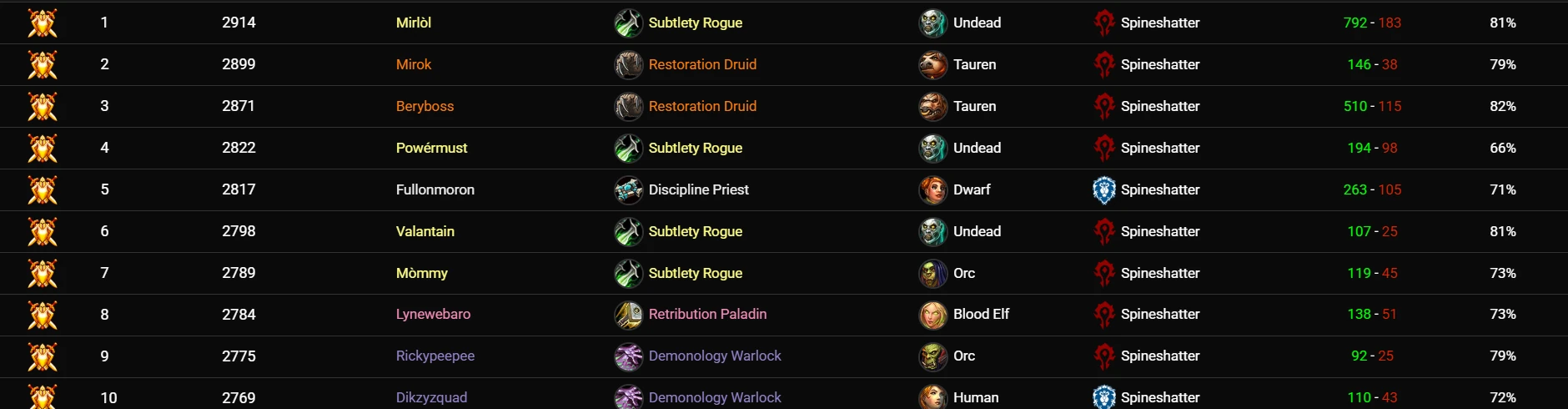
Why RD (Resto Druid / Rogue) tops 2v2: the sheer volume of crowd control. The kill loop is Cheap Shot into Kidney Shot into a chain of Cyclones, and while the target is locked the Rogue restealths to reset the whole sequence. If the Rogue can’t restealth, Bash bridges the gap and Kidney comes back around — either way, with clean play two targets sit in control almost permanently. Against healer teams you keep Wound Poison up and refresh it before it falls off while you tunnel, and Blind covers the case where the third Cyclone doesn’t land. Nothing else in the bracket applies this much uptime. In the later phases the Druid can swap to Moonkin for more damage, better survivability, and immunity to being Sapped or locked down in caster form — which only widens the gap.
Reading the Tiers
The list follows the long-established Skill-Capped methodology. S-tier comps define the meta and form the core of nearly every top-rated team. A-tier stays highly competitive and reaches Gladiator with skilled play, just without S’s universal dominance. B-tier can compete at high ratings but carries clear limitations and fewer viable partners. C-tier struggles against the meta — playable, but short on the tools to push the highest cutoffs.
Gear Is Half the Battle
Here’s what new arena players underestimate in TBC: your comp only matters if your gear can back it up. Resilience is what stops you getting globalled, and the best weapons and shoulders sit behind arena rating and points — so an undergeared team in the perfect comp still loses to a geared team in a worse one. Before you grind rating, get your gear sorted; a full resilience set plus the season weapon closes the single biggest gap between you and Gladiator, and our TBC PvP Gear Boost covers exactly that.
How to Actually Climb to Gladiator
Four habits separate the teams that hit the cutoff from the ones that stall — and if you want the title itself broken down step by step, our guide on how to get Gladiator in TBC Anniversary walks the whole path to the mount.
- Pick your comp before your class. Decide on RMP, RD or whatever fits your duo, then play the role it needs — the setup carries more rating than any single spec.
- Gear first, push second. Resilience and an arena weapon are non-negotiable at high rating. Get the set, then climb.
- 5v5 to gear, 2v2 to prove it. 5v5 pays the most arena points, so it’s the fastest way to farm gear; 2v2 is the most-played, most skill-testing bracket and pays the least. The Gladiator title and mount drop in any bracket, so chase the cutoff wherever your comp is strongest.
- Learn one CC chain cold. Most TBC kills come from a single clean crowd-control setup — drill your opener until it’s muscle memory.
Short on time, or stuck a few hundred points below where your comp should sit? A coordinated push clears in days what solo queuing drags out for weeks — comp, gear and rating handled end to end, so you spend the season playing instead of grinding.
Related items
 How to Get Gladiator in TBC Anniversary: Cutoff, Comps and Gear
  TBC Anniversary Class Guide: How to Choose the Best Class for PvE and PvP
  TBC Anniversary Rogue PvP Guide – BiS Gear, Talents and Tips
  Best Addons for The Burning Crusade Anniversary (TBC) 2026 Guide