

Rogue PvP in WoW: The Burning Crusade (TBC) Anniversary Season 3 is S-tier. The class revolves around control, burst damage, and perfect timing. Subtlety is the dominant PvP specialization — unmatched opener pressure, deep crowd control chains, and survivability through mobility and resets. This guide covers everything: race choice, talent build, full BiS gear, best comps, matchup tips, and advanced mechanics. If you would rather skip the grind, our TBC arena boost team can push your rating and gear it out for you.
Rogue PvP at a Glance — TBC Anniversary Season 3
Best Race for Rogue PvP
Race choice directly affects your survivability and control uptime in TBC arena. Human is the best Rogue race overall, with Undead a close second that becomes the top pick for the RD (Rogue / Resto Druid) comp specifically.
Human — Best Race Overall
- Perception — significantly increases stealth detection radius for 20 seconds on demand. The stealth phase at the start of every match often decides the outcome; Perception turns that first reveal into a controlled advantage rather than a coin flip, especially in Rogue mirrors and against Druids.
- The Human Spirit plus the racial weapon-skill bonuses with swords and maces are relevant for several BiS weapons.
- Human is the default best choice for every Rogue comp except RD — pick Human unless you are specifically rolling Rogue / Resto Druid.
Undead — Best for RD (Rogue / Resto Druid)
- Will of the Forsaken — removes Fear, Sleep, and Charm on activation, effectively acting as a second trinket against Fear-heavy matchups such as Warlock/Healer and Warrior/Druid.
- In the RD comp (Rogue / Resto Druid), Undead is the best race — Will of the Forsaken lets the Rogue play fully aggressive through fear chains while the Druid handles healing and resets, which is exactly how RD wins its long games.
- Cannibalize provides out-of-combat HP recovery in outdoor PvP.
Rogue PvP Talents & Spec
Subtlety is the only PvP-viable Rogue spec in TBC Season 3. The talent tree does not focus on raw damage — it provides control tools and survivability that define how Rogues win fights. The capstone talent Shadowstep grants an instant 25-yard gap close, making it near-impossible for opponents to kite or outposition a Subtlety Rogue.
Talent Build
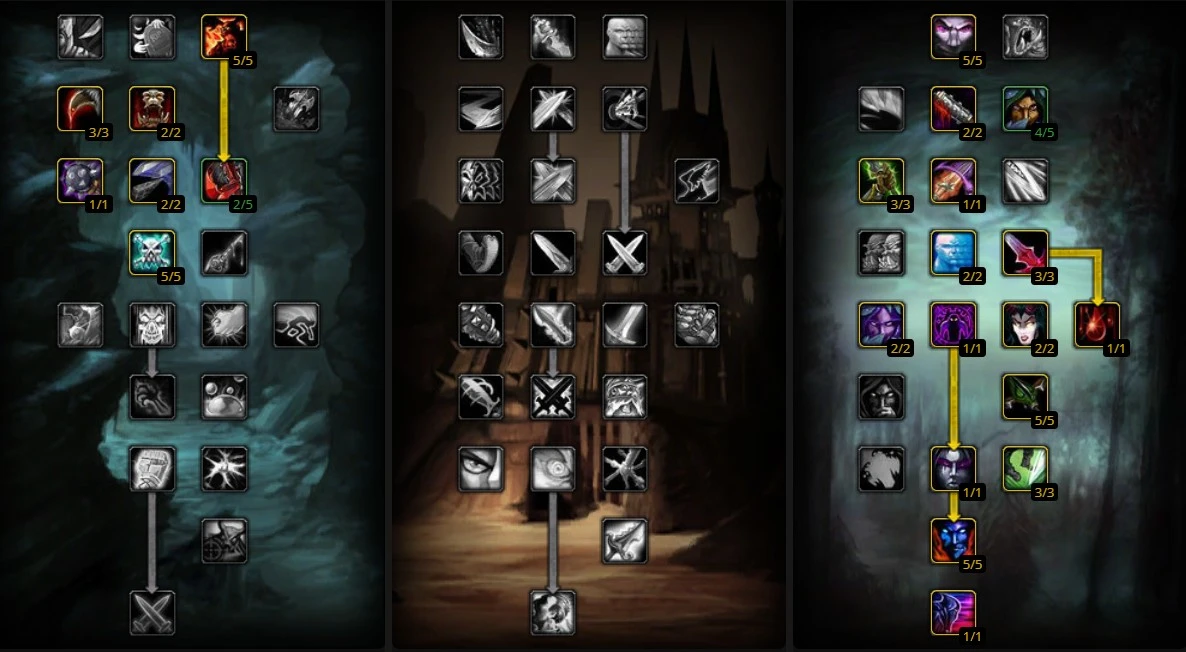
1. Standard — 20 / 0 / 41
The default Subtlety PvP build, used in the majority of setups and across both brackets. Maximum control and reset potential — the safe pick if you are not sure which spec your comp wants.
 ⤢ Click to enlarge
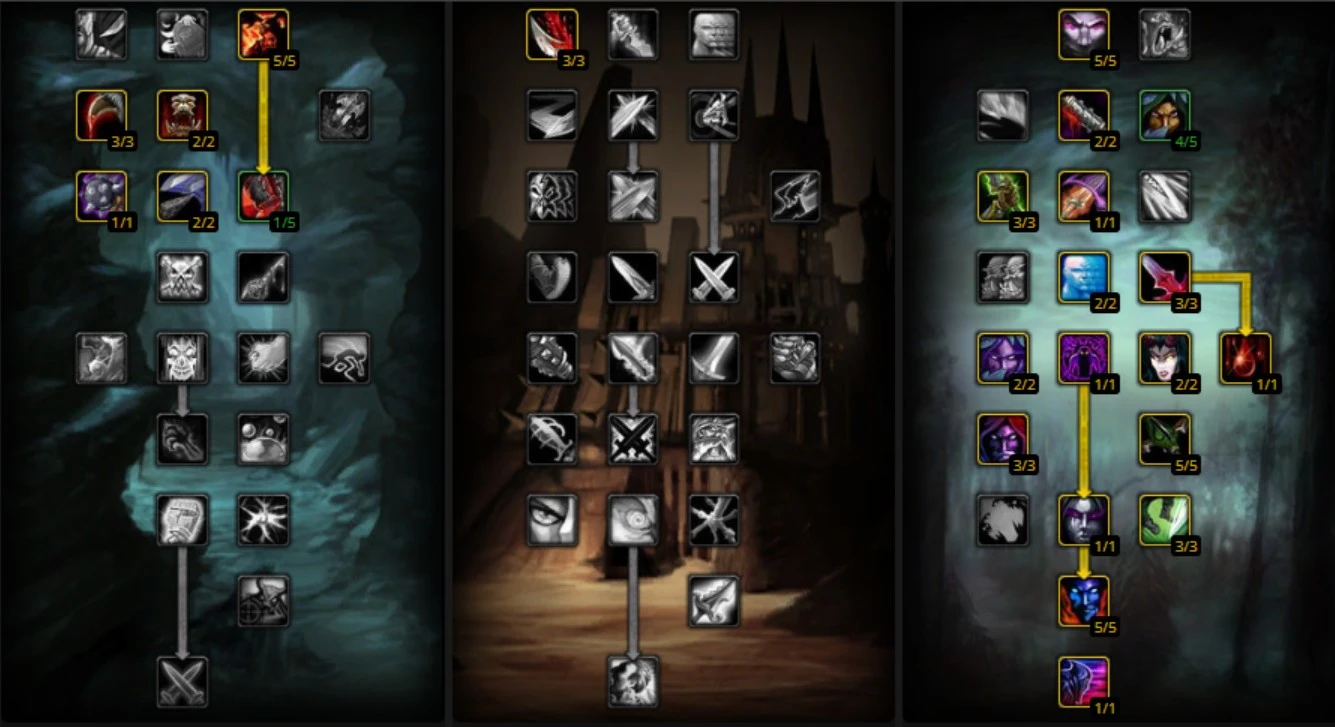
2. Double-DPS — 14 / 3 / 44 RSP / 2-DPS
A 2-DPS spec, primarily for RSP. Here you take improved Expose Armor (minus armor) because you burst the healer under a Cheap Shot → Gouge combination: during the Gouge the Shadow Priest dispels and applies Vampiric Touch, then Expose Armor lands at the end of the Cheap Shot (the SP gives Silence into it), followed by Vanish → Eviscerate.
- Why no Wound Poison here? Because you are not tunneling a single target — you are bursting in a coordinated window, not grinding one healer down.
- Why improved Gouge? Because you need uptime for the dispel and your DoTs, and uptime so your Shadow Priest can peel off and self-heal against any double-DPS. The Gouge window also lets the Rogue safely re-stealth.
- Why the bonus opener-damage talent? Because you burst the target in the first ~10 seconds of the fight.
 ⤢ Click to enlarge
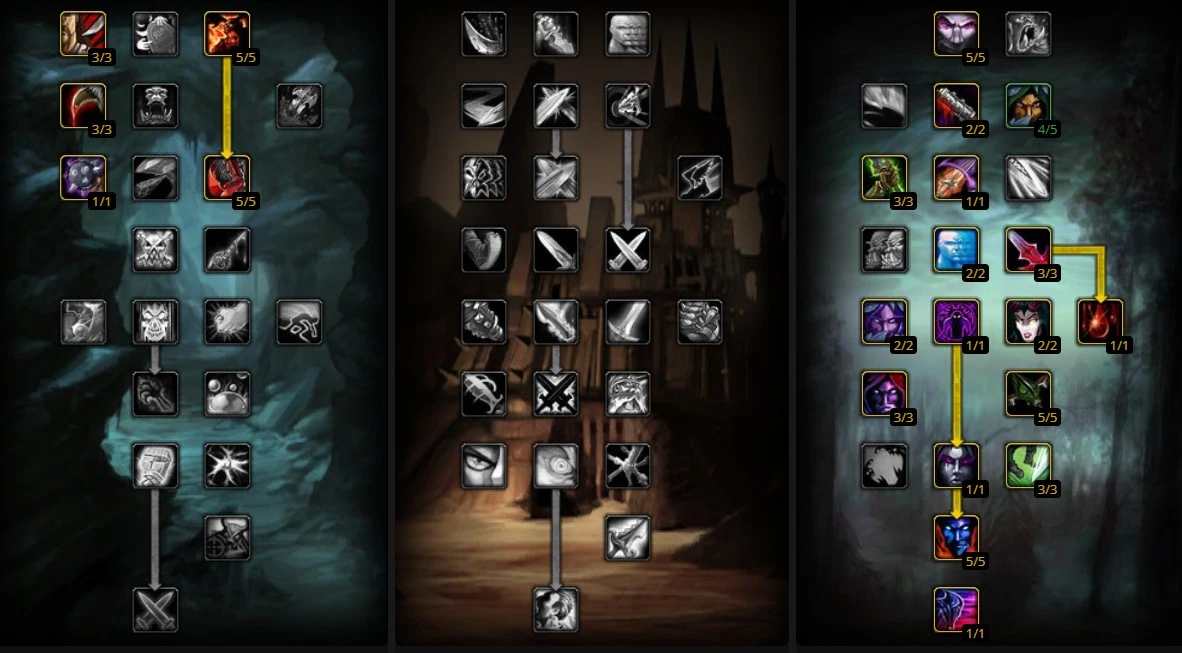
3. RM — 17 / 0 / 44 Rogue / Mage
The Rogue / Mage spec. 20/0/41 is also playable, but you do not really need Wound Poison — it only nets a profit in roughly 10% of games.
- Take 3/3 Improved Eviscerate so you have burst under your stuns.
- Take Lethality because you are simply spamming Hemorrhage.
- Why Master of Subtlety? Because you mostly burst the healer under the opener.
 ⤢ Click to enlarge
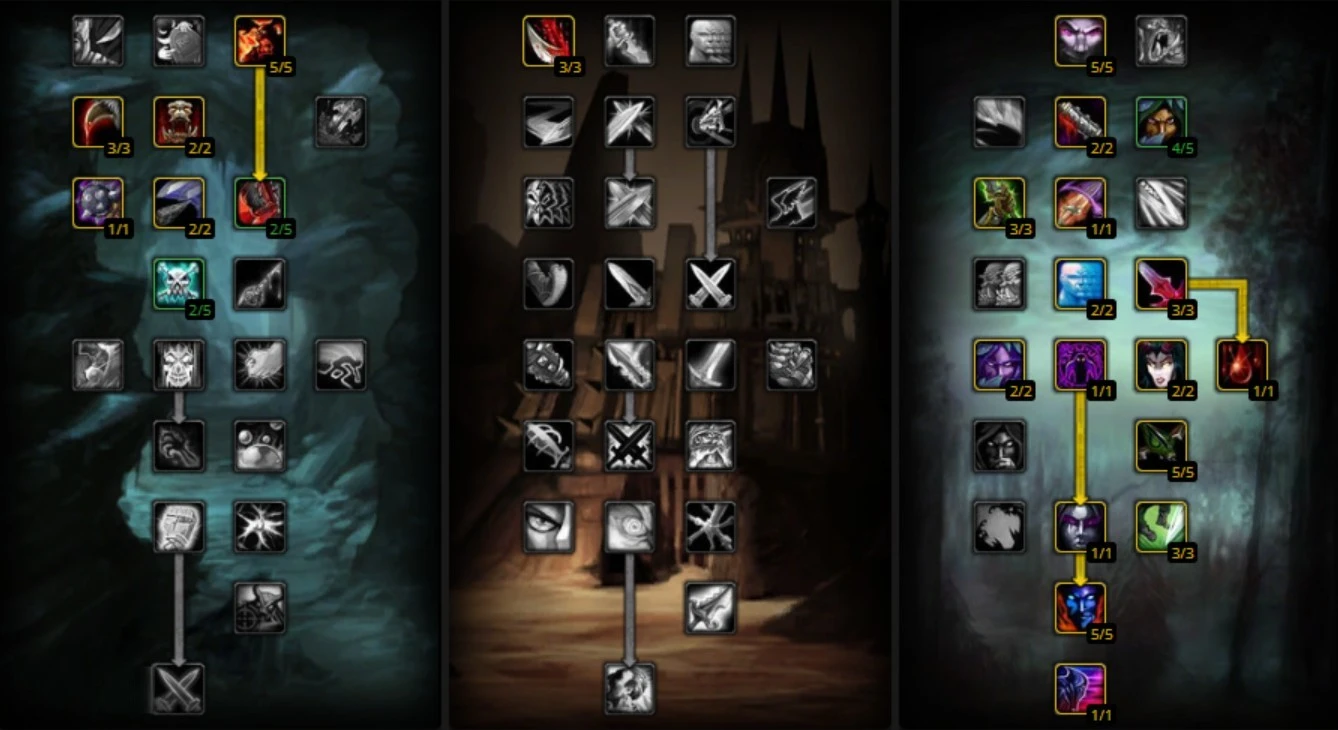
4. Alt RSP — 17 / 3 / 41 Situational
An alternative for RSP, but in my opinion weaker than the 14/3/44 build above. Here you take Vile Poisons — useful if, for example, you are up against setups like LD and you have trouble finding a Druid and setting him up at the start. Even so, the first RSP build is the better one in my view.
 ⤢ Click to enlarge
Key Talents
- Preparation — resets Vanish, Sprint, Evasion, and Cold Blood cooldowns. This talent alone defines Subtlety PvP. It enables double openers, extended control chains, and emergency survivability resets. Without Preparation, Subtlety is a completely different class.
- Shadowstep — instant 25-yard teleport on 30-second cooldown. Use it to close on kiting targets, re-engage after knockbacks, or reposition behind pillars instantly. Shadowstep into Cheap Shot or Kick is a core PvP mechanic — the gap close is essentially ungappable.
- Hemorrhage — primary combo point generator replacing Backstab. Deals solid damage and applies a debuff increasing physical damage taken by the target. Benefits both your output and melee teammates in comps like RMP.
- Dirty Tricks + Improved Sap — reduces Sap and Gouge energy cost. Allows smoother CC chains and more frequent openers. These talents increase control reliability significantly in both 2v2 and 3v3.
- Premeditation — provides 2 instant combo points before opening from stealth. Enables an immediate Kidney Shot (5cp) on opener rather than needing to build combo points first. Faster pressure, faster trinket burn.
- Cheat Death — you survive one lethal hit at 10% HP for 3 seconds. This gives you one additional window for Vanish, Cloak of Shadows, or a last Kidney Shot. Converts losses into survivable situations.
- Setup — 33% chance to add a combo point when you dodge, parry, or block. Passive combo point generation during Evasion — faster follow-up control after defensive cooldowns.
Professions
Profession choice for Rogue depends on your comp and gear access. Engineering is situational rather than mandatory — it shines in some setups and is skippable in others.
- Engineering — situational, strongest in double-DPS comps. The Deathblow X11 Goggles carry extra blue sockets, which gives a real stat advantage in double-DPS setups where you stack as much offense as possible. Engineering also brings Goblin Sapper Charges and net throws for arena utility. However, if you play Human and have access to T5 content, you can instead run the T5 legs — the stat difference from that combination outweighs the X11 helm in many cases. Treat Engineering as a per-setup choice, not an automatic pick.
- Second profession — Mining. Mining lets you farm gold efficiently in Mana Tombs and The Steamvault, and it offsets the cost of leveling Engineering itself. It is the most economical pairing for a Rogue gearing through S2.
Rogue PvP BiS Gear — Season 3
Season 3 BiS gear for Subtlety Rogue prioritizes Resilience, Attack Power, Agility, Hit Rating, and Stamina. Some PvE items remain best-in-slot over PvP equivalents when the stat gain outweighs the resilience loss — primarily in rings, cape, and neck slots.
BiS List
The full set is assembled in the Wowhead gear planner — slot by slot below:
| Slot | Item | Note | Source |
|---|---|---|---|
| Head | Vengeful Gladiator’s Leather Helm BiS | Massive Resilience and Agility | Arena Vendor (S3) |
| Neck | Telonicus’s Pendant of Mayhem | Optimum DPS stat spread | Tempest Keep — quest reward |
| Shoulders | Slayer’s Shoulderpads | High attack power, shreds the opponent’s armor | Black Temple — Mother Shahraz token |
| Back | Thalassian Wildercloak | High AP and Agility | Tempest Keep — Kael’thas |
| Chest | Vengeful Gladiator’s Leather Tunic BiS | Maximum socket flexibility | Arena Vendor (S3) |
| Bracers | Insidious Bands | High hit rating and AP | Black Temple — Teron Gorefiend |
| Gloves | Vengeful Gladiator’s Leather Gloves BiS | Must-have — enables Deadly Throw to interrupt casts | Arena Vendor (S3) |
| Belt | Belt of Deep Shadow | High hit rating and AP, two blue sockets | Leatherworking craft |
| Legs | Vengeful Gladiator’s Leather Legguards BiS | Heavy Crit + Hit rating and Resilience | Arena Vendor (S3) |
| Boots | Vindicator’s Leather Boots | PvP BiS with the movement enchant foundation | Honor & Marks Vendor |
| Ring 1 | Band of the Eternal Champion | High Agility and Stamina, on-use AP burst every minute | Champion’s Covenant quest |
| Ring 2 | Ring of Deceitful Intent | Premium hit rating allocation | Black Temple — Shade of Akama |
| Trinket 1 | Medallion of the Horde / Alliance | Mandatory CC break | Honor Vendor |
| Trinket 2 | Figurine — Nightseye Panther | On-use AP burst plus stealth effectiveness — holds BiS since launch | Jewelcrafting |
| Main Hand | Vengeful Gladiator’s Slicer BiS | Premium Resilience stat stick | Arena Vendor (S3) |
| Off Hand | Vengeful Gladiator’s Mutilator BiS | BiS PvP weapon of the season | Arena Vendor (S3) |
| Ranged | Vengeful Gladiator’s War Edge BiS | BiS thrown — resilience and offensive stats | Arena Vendor (S3) |
Notes & Poisons
- Medallion is non-negotiable. Never run any other trinket in slot 1. The CC break is mandatory in every game at every rating bracket.
- PvE pieces are correct — but not the weapons anymore. In Season 3 the Vengeful Slicer and Mutilator pair takes both weapon slots, while the raid drops earn their place elsewhere: the Tempest Keep neck and cloak, the Black Temple shoulders, bracers and ring. Those stat spreads beat their honor-vendor equivalents by enough to justify the resilience trade.
- Hit rating matters. Sub Rogue needs hit rating to ensure Kidney Shot, Cheap Shot, and Kick land reliably. The PvE rings and boots help reach the PvP hit cap. Do not sacrifice hit completely for resilience.
- Resilience floor: ~300. Below 300 Resilience you die too fast to burst compositions. Above 300, selectively replace PvP pieces with PvE equivalents where the stat gain is significant.
Weapon Poisons
- Wound Poison (Main Hand / Off Hand) — stacks a debuff that cuts the enemy’s incoming healing by up to 50%, the Rogue’s equivalent of Mortal Strike. Essential against any team with a healer. Apply it on both weapons to stack it as fast as possible.
- Crippling Poison (Off Hand, or via Shiv) — slows the target by 70%. A Rogue needs to keep enemies in range and deny escapes — Crippling lets you stick to kiting targets and shut down runners. Apply on demand with Shiv when you need an instant slow.
Best Rogue Arena Comps
Sub Rogue fits into strong comps at every bracket. The class provides the control backbone — the secondary partner is chosen based on what utility and damage type best complements Rogue CC chains.
2v2 Comps
Tier order for Rogue 2v2 in TBC Anniversary S2, strongest first:
RD — Rogue / Resto Druid S-tier — best 2v2
The strongest 2v2 for Rogue. Very high survivability, easy fight resets, and a huge amount of CC between both players. Games can run long but trend in RD’s favor. Best played Undead for Will of the Forsaken. Also playable with a Feral Druid in low-resilience setups; the Druid’s Cyclone and mobility complement Rogue control perfectly.
RM — Rogue / Mage S-tier — Hard
Classic double-DPS setup based on burning enemy cooldowns and resetting the fight. Very dynamic and fast-paced — one mistake ends the game immediately for either side. Played in the 17/0/44 Shadowstep build. Requires exceptional game sense and communication.
RR — Rogue / Rogue Strong — Hard
Double Rogue. Enormous burst and CC — two openers, double Kidney Shot / Blind chains, and the ability to delete a target through a full stun lock before they can react. Extremely swingy and reliant on winning the stealth phase, but devastating when it lands first.
RDP — Rogue / Disc Priest High ceiling — Hard
Difficult in current realities but very strong with coordinated play. Disc Priest brings Mass Dispel, Mana Burn, Fear Ward, and strong single-target healing while the Rogue provides all the CC. High skill floor, high ceiling.
R + Feral Druid Medium
Aggressive double-melee pressure with a Feral partner. Lots of bleed and burst, plus Cyclone and Feral Charge for control, but lower survivability than RD with a Resto Druid — you win by killing fast before resilience matters.
R + Warlock Medium
Rogue burst and control layered on top of Warlock DoTs and fear pressure. Heavy sustained damage that forces healers to overcommit, opening kill windows for the Rogue. Watch your own fear vulnerability if you are not Undead.
RSP — Rogue / Shadow Priest Easiest to pick up
The easiest Rogue 2v2 to execute and a strong rating-gain comp for newer players. Monstrous burst, massive CC from both players. Stack as much PvE gear as you can while keeping ~200 Resilience minimum; Shadow Priest’s Vampiric Embrace keeps the Rogue alive through incidental damage.
Other setups
Rogue / Ret Paladin and other pairings are playable but sit below the comps above. They lean on the partner’s utility (Repentance, Hammer of Justice, Hand of Protection) and work best when the Rogue abuses PvE gear for extra damage.
3v3 Comps
Tier order for Rogue 3v3 in TBC Anniversary S2, strongest first:
RMP — Rogue / Mage / Disc Priest Best 3v3 — Hardest to execute
The strongest comp for Rogue in TBC Anniversary S2 — the oldest and most proven TBC setup. Built around frequent target switches, burning enemy cooldowns, and resetting fights. Enormous CC: Sap, Sheep, Fear from Priest, Blind, Kidney Shot, Gouge. Played in the 17/3/41 or 14/3/44 Shadowstep build. Requires flawless coordination — every player comms every swap in real time. This is the comp most teams ride into the top 0.5% cutoff for the Gladiator title.
Rogue / Rogue / Druid Very strong — Hard
Double Rogue with a Resto Druid anchor. Absurd CC and burst — two openers and stacked stun locks while the Druid keeps both Rogues alive and resets the game with Cyclone and mobility. Wins fast off a clean opener; the Druid’s job is to survive the counter-pressure and enable the next swap.
RLP — Rogue / Warlock / Paladin Medium
Rogue and Warlock pressure backed by a Paladin’s Hand of Protection, Freedom, and strong single-target healing. Heavy sustained damage plus Rogue control, with the Paladin peeling and keeping the team topped. Solid and more forgiving than RMP.
Other setups
RLS (Rogue / Warlock / Resto Shaman) and RLD (Rogue / Warlock / Resto Druid) are playable variants. RLS tunnels healers with aggressive switches and totem utility; RLD swaps the Shaman for a Druid’s Cyclone and kiting but is much harder to pilot. Both sit below the comps above.
Rogue PvP Matchups
Rogue matchups in TBC arena come down to one thing far more than any scripted sequence: who controls the stealth phase and whose cooldowns are up. There is no fixed “kill order” that works every game — the right target changes with enemy trinket timers, healer mana, and which team opens first.
General priorities that hold across the common S2 setups:
- Versus double-caster (Mage/Priest, RMP mirrors): respect the opening Invisibility/stealth, save Cloak of Shadows for when your partner is locked in CC, and play tight to pillars to line-of-sight burst.
- Versus a healer comp (Warrior/Druid, Hunter/Healer): apply Wound Poison early, tunnel the healer through Mortal-Strike-equivalent pressure, and use off-target control to keep the DPS off your partner.
- Versus Hunters: do not tunnel them through Deterrence and traps — sit on the healer instead and use the Hunter’s own CC windows to reset.
- Mirror (Rogue comps): the stealth phase decides it. Perception (Human) or your partner’s AoE to reveal is the whole game — open first and force the enemy Rogue’s trinket.
Rogue PvP Tips & Mechanics
Opener & CC
- Plan your opener around enemy cooldowns. If their healer’s trinket is on CD, open on the healer immediately. If both CDs are up, Sap the healer and open on the DPS to force a trinket — then swap to the healer.
- Sap → Cheap Shot → Kidney Shot is the standard chain to force trinkets early. Between these you apply maximum damage. Save Blind and Vanish for resets or cross-CC plays — never spend them reactively on impulse.
- Cooldown management beats raw damage. A Rogue who survives with CDs intact will always find another kill window. A Rogue who burns Vanish, Preparation, and Cloak in the first 30 seconds has nothing left for the rest of the game.
- Avoid wasting Shadowstep early unless it guarantees control or a kill opportunity. It is a gap-close tool, not a panic button.
Movement
- Treat arena geometry as a defensive tool. Staying tight to pillars lets you instantly line-of-sight incoming spells, saving your major cooldowns for offensive pressure windows rather than defensive emergencies.
- Shadowstep discipline. Do not Shadowstep targets you can reach on foot. Save it for kiting casters, targets who just used a movement ability, or instant repositioning behind a pillar mid-fight.
- Sprint discipline. Do not Sprint at the starting gates — hold it to disengage from a target resetting behind corners or to close on someone you cannot Shadowstep.
Energy & Interrupts
- Energy pooling on healers. When tunneling a healer, hold your energy around 45 instead of spending instantly. This keeps you ready for immediate utility — Kick, Gouge — without waiting for regeneration.
- Missed Kick → Gouge immediately. If you get baited by a fake cast and miss your Kick, react with Gouge to disrupt their next cast. A missed Kick without Gouge follow-up is two lost casts — that is a kill window for the enemy team.
- Interrupt timing. Interrupts land either at the very start of the cast bar (safe — prevents partial benefit) or the final millisecond (high value — forces the longest possible lockout). Practice both. Late interrupts are higher value against experienced players who stop-cast bait early.
- Kidney Shot must land from behind. Always position behind your target before pressing Kidney Shot. Landing it from the front allows parry or dodge — the entire stun is lost. This is a critical mechanical habit that separates competent Rogues from great ones.
Advanced
- Mid-fight Sap setup. Pop Vanish right after a teammate’s CC ends — ensuring the previous chain did not share diminishing return with your Sap. Once you briefly drop combat after 6 seconds, lock them down again.
- Shiv against Evasion. When an enemy Rogue pops Evasion, skip normal combo generators. Use Shiv exclusively — Shiv cannot be dodged or parried. This lets you continue building combo points and stacking Wound Poison through their most powerful defensive cooldown.
- Cloak of Shadows discipline. Save Cloak strictly for low-HP emergencies when your healer is stuck in unbreakable CC. Using Cloak offensively or for comfort is wasting your most powerful emergency defensive cooldown.
- Keep Slice and Dice up. Try to always have Slice and Dice running on yourself, even off just 1–2 combo points — the extra attack speed keeps your energy, poison stacks, and pressure flowing.
- Track your procs and cooldowns. Install WeakAuras or TellMeWhen to track the cooldowns and procs of your Mongoose enchants and trinkets, so you burst exactly when your damage is buffed.
- Learn weapon swapping. Understand when to swap weapons so you catch Disarms on your off-hand — pairing the swap with a low-on-disarm-duration weapon minimizes how long your main hand is gone.
- Bind CC to arena targets. Make Sap and Blind macros targeting your arena frames (arena1/2/3) so you can control a specific enemy without manually targeting.
Useful Arena Macros
Replace arena1 with arena2 or arena3 to make one macro per enemy frame. The opener macro fires Shadowstep, Premeditation, and Cheap Shot in sequence on the chosen target; the second covers Sap and Shiv.
/cast [@arena1] Blind — and bind one per arena frame so you can land CC on the right target instantly without breaking your camera or current target.