

TBC Anniversary is Coming Soon — Class, Faction, and Race Guide
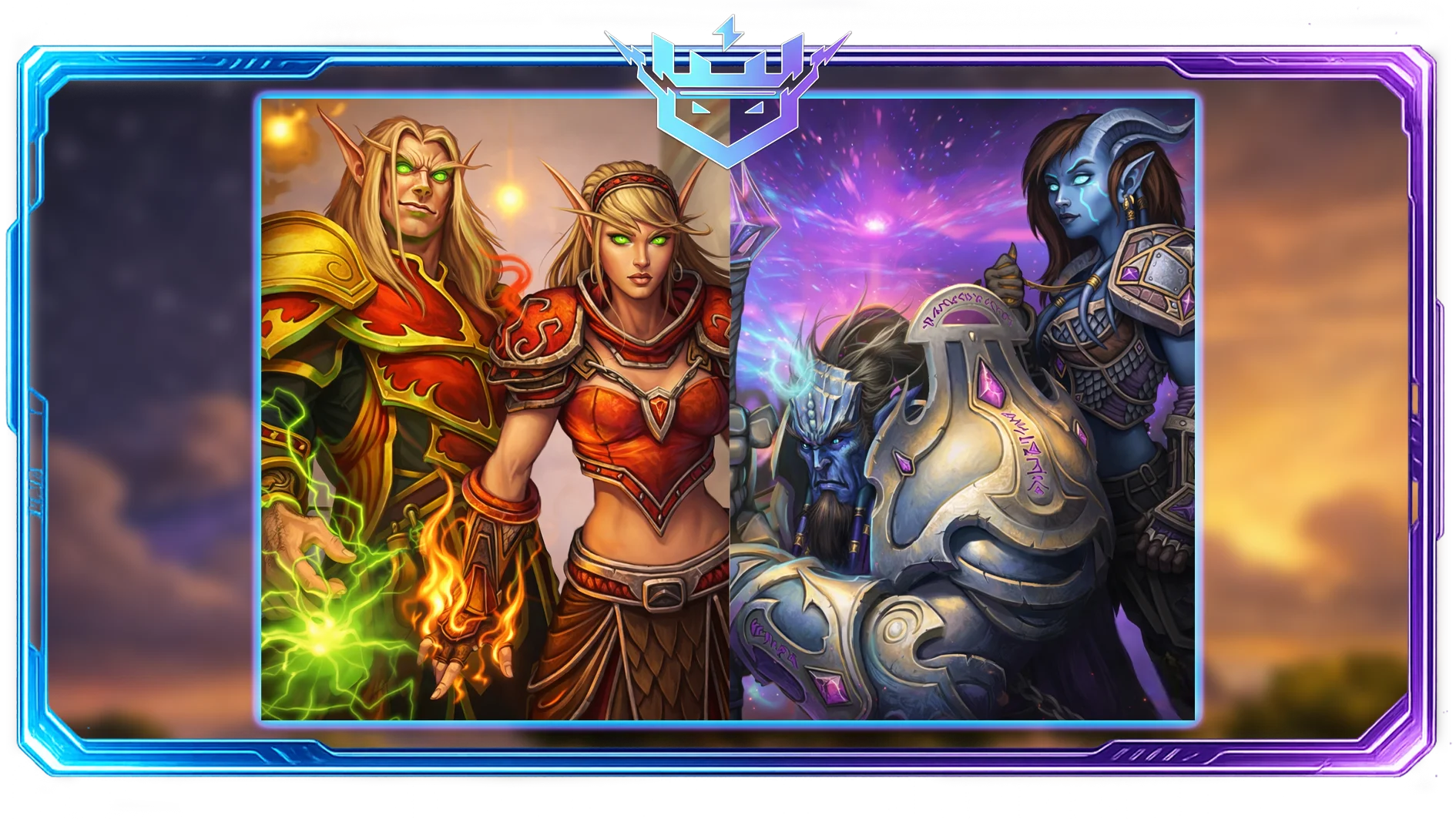
TBC Anniversary is just around the corner, and many players are already asking themselves an important question: which class, faction, and race should I start with?
Some players are looking for a character they can truly enjoy and connect with, others want to dominate in PvP, and some aim to become top DPS or a reliable tank in raids.
In this guide, we’ll cover all of these aspects and try to answer the most common questions you may have before diving into one of the most iconic expansions in World of Warcraft’s history.
Choosing a Faction in TBC Anniversary
The first and most important decision is choosing your faction. For many players, this choice is deeply tied to nostalgia. Back in original TBC days, we rushed home from school just to log in faster and roam the Barrens or Westfall for hours.
If you’re mostly a casual player and want to enjoy the atmosphere, story, and world, simply choose the faction you love the most.
However, if your goal is PvP or PvE efficiency, faction choice becomes more important.
PvP Perspective
For arena PvP, especially in the early seasons, Horde is generally the stronger option:
 Undead — Will of the Forsaken removes fear effects, which is absolutely game-changing in critical moments.
 Orcs — reduced stun duration makes them extremely strong against rogues and warriors.
 Tauren — War Stomp provides an extra AoE stun that can secure kills or interrupt key casts.
That said, Alliance also has strong PvP setups. For example, Warrior + Druid compositions benefit greatly from Gnome, since warriors struggle with mobility in TBC, and the gnome racial removes roots, slows, and novas.
If your main goal is dominating the arena in TBC, choosing the right class and race is only the first step. Proper decision-making, positioning, and matchup knowledge are what truly separate average players from high-rated ones — this is where TBC Arena Coaching can significantly accelerate your progress.
PvE Perspective
In PvE, Alliance is often considered slightly more efficient:
 Gnomes gain +2% Intellect, which is excellent for caster DPS.
 Dwarves make very solid tanks thanks to Stoneform, which helps mitigate damage and remove debuffs.
That said, race and faction are never critical for PvE success. You will find top-tier raiding guilds on both factions, and skill, consistency, and teamwork matter far more than racials.
Choosing a Race
 Horde Races
If your main goal is arena PvP, race choice should strongly depend on your class:
- Rogue / Priest / Mage — Undead is the absolute best PvP race in TBC. Fear removal often decides matches.
- Warrior — Orc is the best choice due to stun resistance, though Tauren is also viable thanks to War Stomp, which can help finish fleeing targets or interrupt spellcasts.
In PvE, racial differences are minor. Choose what fits your class fantasy or min-max slightly if you care about parsing.
 Alliance Races
- Priest / Holy Paladin / Shaman — Dwarf is an excellent choice. Stoneform is very strong in arena, especially against warriors and rogues.
- Warrior — Gnome is hands down the best option. Root removal makes it much easier to stay on mages and druids.
- Rogue — Gnome or Human. Human is especially strong against stealth-based compositions, as increased stealth detection helps reveal rogues and druids earlier.
For PvE, Alliance racials again provide small bonuses, but nothing that will lock you out of endgame content.
Choosing a Class

Now we get to the most exciting part — class selection.
PvP Classes
In TBC PvP, there are four top-tier classes:
- Warrior
- Druid
- Rogue
- Priest
All other classes are generally considered Tier 2 for PvP.
Druids are the best healers, rogues provide the highest pressure DPS, and warriors dominate in coordinated setups.
PvE Classes
In PvE, everything depends on the role you want to play:
Top Tanks (PvE – TBC Anniversary)
Paladin – Paladins excel at tanking trash packs and multiple enemies. They provide the best AoE threat generation in TBC, making them indispensable for dungeons, Heroics, and trash-heavy raid encounters. Protection Paladins are the backbone of efficient PvE farming and raid clears.
Druid – Feral Druids are strongest when tanking 2–3 targets or sustained cleave damage. Thanks to their high armor and health pool, they perform exceptionally well on encounters with steady incoming damage. Druids are also very flexible, as they can switch to DPS when not actively tanking.
Warrior – Protection Warriors are best suited for boss tanking. Their strength lies in strong defensive cooldowns, precise damage mitigation, and reliable single-target threat. While they struggle with AoE threat compared to Paladins, Warriors remain a solid choice for main boss encounters.
All three tanks are viable in TBC PvE, but their effectiveness depends heavily on proper role assignment. A well-balanced raid typically uses Paladins for trash, Druids for multi-target fights, and Warriors for bosses, maximizing overall raid efficiency.
Whether your goal is PvP or PvE, TBC Anniversary offers countless ways to enjoy the game. Some players prefer the long progression path, while others want to focus on the most exciting parts of the expansion right away — organized raids, challenging encounters, and meaningful upgrades. In such cases, TBC Raid Boost can be a great option to experience endgame content without unnecessary delays.
Healers (PvE – TBC Anniversary)
Shaman
Restoration Shamans are the strongest and most desired healers in TBC PvE. Their value goes far beyond raw healing numbers.
Why Shamans are top-tier:
-
Totems provide unmatched group utility (Mana Tide, Wrath of Air, Grace of Air)
-
Chain Heal is extremely effective in raid-wide damage scenarios
-
Bloodlust / Heroism is mandatory for raid progression and DPS optimization
Because of their unique utility, raids often bring multiple Shamans, usually one per group.
Holy Priest
Holy Priests are excellent raid healers with strong reactive tools.
Strengths:
-
Powerful AoE and group healing
-
Strong emergency spells for saving the raid
-
Very flexible and reliable in high-damage encounters
Holy Priests shine in situations where consistent raid-wide healing is required.
Holy Paladin
Holy Paladins are the best single-target and tank healers in TBC.
Strengths:
-
Exceptional tank-focused healing
-
Extremely mana-efficient
-
Strong defensive cooldowns and survivability
They are usually assigned to main tank healing, where they perform better than any other healer.
Druid (Restoration)
Restoration Druids are slightly behind other healers but remain useful and viable.
Pros:
-
Strong heal-over-time effects
-
Excellent mobility during encounters
-
Good sustained healing over long fights
Cons:
-
Limited burst healing
-
Less impact during high spike-damage phases
Most raids bring one Restoration Druid mainly for utility and sustained healing.
Top DPS Rankings (TBC Anniversary Phase 2)
We’ve formally concluded the warm-up phase in Karazhan and have proceeded to more challenging trials in the Serpent Shrine Cave (SSC Raid) and TK (Tempest Keep). This is the actual meta-game of Phase 2, where Tier 5 set bonuses, a 40% reduction in fight duration, and the presence of certain useful abilities determine who in LFG is regarded as a “god” and who is a “loser.” Success in this phase is no longer just about raw numbers; it’s about having the right support to sustain your mana and the threat management to stay off the floor.
NOTE: Also, if you plan to take Phase 2 of the TBC Anniversary seriously, we recommend reading the latest guide on boss raids and clear strategies – TBC Anniversary SSC Guide.
Arcane Mage
Arcane Mages are the definitive TBC Anniversary Phase 2 carry. As soon as you assemble the 2-piece set of Tier 5, the damage from Arcane Blast will be increased by 20%, resulting in a significant boost to your damage per second.
- Pros: Massive burst that thrives in shorter Anniversary fight windows.
- Cons: Extremely mana-hungry; you are now tethered to a Shadow Priest for the rest of the expansion.
Hunter
Hunters remain the most consistent top-tier DPS as this class was in the 1st Phase of TBC Anniversary Meta, dominating single-target encounters like Lady Vashj.
- The Scarcity: Despite being S-tier, they are surprisingly rare. Many players are discouraged by the Beast Lord dungeon grind or the competition for Dragonspine Trophy (DST).
- Utility: Misdirection remains mandatory for keeping your overzealous Warlocks alive during trash pulls.
Warlock
Warlocks are the AoE kings of Phase 2 thanks to Seed of Corruption, but they come with a high “death tax.”
- Threat Issues: Most Protection Paladins currently lack the spell power to hold threat against Phase 2 Seed spam. Expect to be “floor-tanking” 24/7 if you don’t manage your threat.
Competition: You share the most contested gear token in the game with Mages and Hunters.
Raid performance in TBC heavily depends not only on class choice, but also on gear progression. For players who want to catch up quickly, optimize their raid readiness, or save time, TBC Raid Gear Boost is an efficient way to enter endgame content without weeks of preparation.
Retribution Paladin & Warrior
Both are currently in the “Sleeper” category, scaling massively with the shorter fight durations.
- Ret Paladins: Can crush early bosses if they get priority on Nether Vortexes materials to craft the Lionheart Executioner weapon item.
- Warriors: In a stacked group with Bloodlust/Heroism and haste buffs, Warriors are currently out parsing Mages and Hunters on specific fights like Fathom-Lord Karathress.
Elemental and Enhancement Shaman
In Phase 2, Shamans are the non-negotiable anchors of every raid.
- The Vashj Specialist: Elemental Shamans are mandatory for kiting Striders on Lady Vashj using Frost Shock.
- The Melee Battery: Enhancement Shamans are so in-demand that guilds will funnel your gear regardless of your skill level just to keep their melee groups from quitting.
The “Bricked” Category: Rogue & Fury Warrior
The LFG tool is currently saturated with Rogues and Fury Warriors.
- The Problem: They bring very little unique utility compared to a Boomkin or a Shaman. Unless you are the specific Rogue providing Improved Expose Armor, finding a progression raid spot will be your hardest challenge of Phase 2.