

Choosing the right method to distribute gear is one of the most important decisions any raid group makes in World of Warcraft. The way a group handles dropped items dictates the entire atmosphere of the raid, the type of players it attracts, and the overall success of the run. Whether you are stepping into a casual pickup group for an evening or committing to a hardcore progression guild, understanding wow loot systems explained in this guide will clarify the options available to you.
There are several established methods for distributing gear, each with its own community culture and set of rules. In this guide, we will break down exactly how every major loot distribution method functions. You will learn about GDKP, DKP, Loot Council, Master Loot, Soft Reserve, MS>OS, and Personal Loot. We will weigh the pros and cons of each, explain which player types benefit most, and clarify the current ruleset across different versions of the game so you know exactly what to expect before you join a group.
WoW Loot Systems Overview — What Are They?
In the context of raid environments, a loot system is a predefined set of rules that determines who gets to take an item when a boss is defeated. Because high-end gear is scarce and highly desirable, simply letting everyone roll randomly on every item often leads to chaos, unbalanced raid progression, and frustration. To solve this, the player base and developers have created structured methods to distribute rewards fairly or optimally.
The systems we will cover include GDKP, DKP, Loot Council, Master Loot, Soft Reserve, MS>OS, and Personal Loot. It is important to note that different versions of the game utilize completely different frameworks. What is standard practice in WoW Retail might be mechanically impossible or heavily restricted in Classic. Similarly, community-driven formats that thrive in Classic environments operate under strict developer guidelines on newer, specialized realms like TBC Anniversary.
GDKP (Gold Dragon Kill Points) — How It Works
When asking what is gdkp world of warcraft players are often referring to one of the most discussed loot formats in the game. GDKP WoW runs replace random rolling or arbitrary points with the game’s universal currency: gold.
The mechanics are highly structured. When a boss is killed and an item drops, the raid leader links the item in the chat and opens an in-raid auction. Players who want the gear place their bids using gold directly in the raid chat channel. The highest bidder wins the auction, trades the agreed amount of gold to the raid leader, and receives the item. This process repeats for every single item that drops throughout the raid.
The defining feature of this format is the “pot split.” All the gold collected from every auction is pooled into a central fund. At the end of the raid, this entire pot is divided equally among all raid members. For a concrete example: if a 25-player raid collects a total of 50,000 gold over the course of the evening, that pot is divided by 25. Every single player walks away with 2,000 gold, regardless of whether they bought an item or not.
These raids rely heavily on a competent organizer. The organizer is responsible for forming a balanced roster consisting of “buyers” (players with excess gold who need gear) and “carries” (geared players who provide the damage and healing needed to clear the raid smoothly). To manage the complex math, organizers frequently use dedicated addons that automatically track every auction, calculate the running total, and figure out the exact math for the final split. For this administrative work, the raid leader or organizer typically takes a commission—often a 5% to 10% cut of the total pot—before distributing the remaining gold to the rest of the group.
GDKP Pros
- Transparency: The auction is entirely public in the chat. There is no hidden favoritism; the highest number always wins.
- Profitable for Geared Players: Geared veterans have a strong incentive to continue raiding, as they earn raw gold for their time.
- No Guild Requirements: You can join a single run on your own schedule without committing to a long-term roster.
- Guaranteed Value: Even if you lose every auction or do not need any drops, the final pot split ensures you still earn gold for your participation.
- High Raid Quality: Organizers are financially motivated to complete fast, full clears to maximize the amount of loot sold.
GDKP Cons
- Requires High Capital: You need a large amount of gold to place competitive bids on highly sought-after items.
- Inherent Inequality: Wealthy players acquire the best gear immediately, creating a gap between rich and average players.
- RMT Incentives: The high prices heavily stimulate the illicit purchase of gold for real money.
- Scam Risks: The organizer holds all the gold until the end of the run, creating a risk that they might disband the group and steal the pot.
- Account Risks: Participating on restricted servers can lead to severe account penalties.
Where GDKP Is Allowed and Where It’s Banned
The legality of this format depends entirely on which version of the game you are playing.
- WoW Retail: ALLOWED. There are no restrictions on trading gold for loot within the current retail environment.
- WoW Classic: ALLOWED. The format operates freely across standard classic era realms.
- TBC Anniversary / Fresh Classic: BANNED. Blizzard officially prohibited the format on these specific realms starting in 2024.
The gdkp tbc anniversary banned status was implemented because the format became the primary channel for Real Money Trading (RMT). Players were visiting illicit third-party websites, buying gold with real cash, and using that gold to win auctions in fresh economies. To break this RMT ecosystem and protect the integrity of the fresh servers, Blizzard completely outlawed the practice. The punishment for violating this rule escalates quickly: players face an initial warning, followed by a temporary suspension, leading ultimately to a permanent account ban.
DKP (Dragon Kill Points) — How It Works
For a traditional guild experience, DKP systems have been a standard part of guild organization in WoW since the early days of raiding. DKP is an artificial currency managed entirely by the guild leadership.
Players earn points by attending raids, arriving on time, and helping defeat bosses. When an item drops, players use their accumulated points to bid on or purchase the gear. This system ensures that players who contribute the most time and effort to the guild are the ones rewarded with the best items.
There are several variations of this format. “Zero-Sum DKP” ensures that the points spent on an item are distributed evenly among the rest of the raid, keeping the economy balanced. “Suicide Kings” uses a rigid priority list where the person at the top gets the item but then falls to the very bottom of the list. “EP/GP” (Effort Points / Gear Points) uses a mathematical ratio to balance a player’s attendance against the amount of gear they have already received.
DKP Pros
- Rewards Loyalty: Consistent attendance and dedication are directly rewarded with purchasing power.
- Clear Transparency: Point totals are usually tracked on a public spreadsheet or via an in-game addon.
- Player Agency: Individuals have the flexibility to save their points for a specific weapon or spend them early on minor upgrades.
DKP Cons
- Punishes Newcomers: New recruits start with zero points and must wait weeks to catch up to veterans who have hoarded currency.
- Administrative Burden: It requires strict, constant bookkeeping by officers.
- Not for PUGs: The system is completely incompatible with pickup groups since points hold no value outside the specific guild.
- Roster Dependent: It falls apart if the guild lacks a stable, consistent group of recurring players.
Loot Council — How It Works
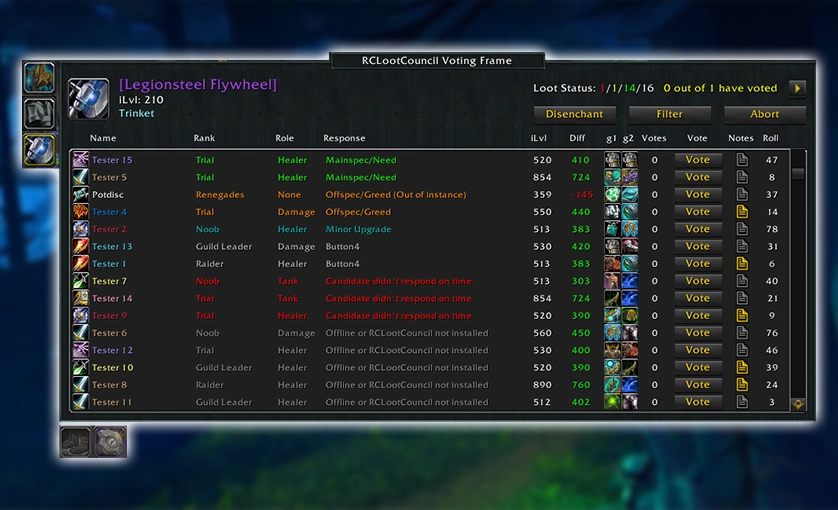
A loot council wow setup completely removes currency, points, and random rolls from the equation. Instead, a designated group of guild officers forms a council to decide exactly who receives each dropped item.
The council bases their decisions on multiple factors to optimize the raid’s overall power. They consider which class benefits most mathematically from the item’s stats, a player’s recent attendance, their performance, and how big of an upgrade the item is compared to what the player is currently wearing. The ultimate goal is to equip the raid to defeat harder bosses, rather than simply rewarding individual players.
Loot Council Pros
- Optimizes Raid Progression: Gear is funneled to the exact classes and players who will provide the most benefit to the entire group.
- High Flexibility: The council can easily adapt to unexpected drops or unique situations.
- No Currency Required: Players do not need to farm gold or hoard points to get gear.
Loot Council Cons
- Highly Subjective: Decisions rely on human judgment, which can lead to favoritism.
- Drama Potential: Players who are passed over for gear often feel slighted, leading to arguments and tension.
- Requires Deep Trust: The entire system collapses if the guild members do not fully trust their officers.
- Unusable for PUGs: Strangers will never trust an arbitrary council of organizers to distribute loot fairly.
Master Loot — How It Works
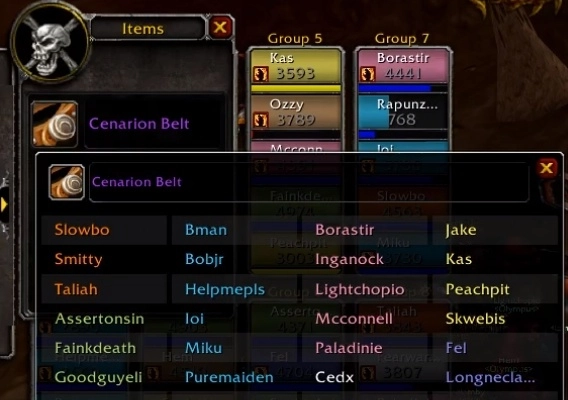
To understand master loot wow mechanics, you have to look at the baseline tool provided by the game client itself. When Master Loot is enabled, the raid leader gains complete manual control over every item on a boss’s corpse. Players cannot loot the boss directly; the raid leader selects the item and assigns it directly into a specific player’s inventory.
Historically, this was the primary tool used to facilitate systems like DKP and Loot Council in Classic versions of the game. In modern Retail, the developers have heavily restricted or entirely removed this feature for unorganized groups to prevent abuse.
Master Loot Pros
- Rapid Distribution: A decisive raid leader can hand out items instantly, keeping the raid moving fast.
- Total Control: Mistakes are eliminated because only one person handles the gear.
- Transactional Efficiency: It is highly convenient for organized guild runs or structured events.
Master Loot Cons
- Ninja-Looting Risk: In an unorganized PUG, a dishonest leader can simply assign all the best items to themselves or their friends and leave the group.
- Relies on Honesty: Participants have zero mechanical protection if the leader decides to break the rules.
- Retail Restrictions: It is largely unavailable for casual or pickup groups in the modern version of the game.
Soft Reserve (SR) — How It Works
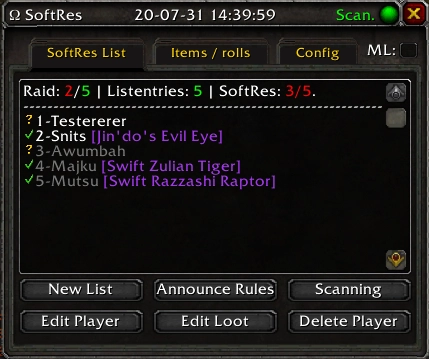
The soft reserve wow format is highly popular in community-driven environments. Before the raid begins, every player is allowed to “reserve” one or two specific items from the raid’s loot table. This is usually managed via external websites like Softres.it or through specialized Discord bots.
When an item drops, the raid leader checks the reserve list. If one person reserved it, they receive it immediately. If multiple people reserved it, those specific players roll against each other, and the highest roll wins. If an item drops that nobody reserved, it defaults to a standard MS>OS open roll for the entire group.
SR Pros
- Targeted Gearing: Players know exactly what they are aiming for and face reduced competition.
- Zero Gold Needed: It is a purely chance-based system with an added layer of player choice.
- Reduces Competition: Highly contested items are only rolled on by those who specifically prioritized them.
- PUG Friendly: It is very easy to set up and manage for a group of strangers.
SR Cons
- No Guarantees: If your reserved item does not drop, or you lose the roll against another reserver, you walk away empty-handed.
- Clashes on Top Items: The most powerful weapons or trinkets often have five or six people reserving them, meaning competition remains fierce.
- RNG Dependent: Without a priority system or currency, sheer luck dictates your gearing speed.
MS > OS (Main Spec Over Off Spec) — How It Works
The ms os wow loot format is the most universal, intuitive system used in pickup groups. The rule is simple: players roll a standard 1-100 random number for items that benefit their primary role (Main Spec).
Tank gear goes to tanks, healing gear to healers, and damage gear to damage dealers. Main Spec rolls have absolute priority. Only if nobody needs the item for their primary role does the raid leader open rolls for Off Spec (secondary roles) or transmogrification purposes.
MS>OS Pros
- Highly Intuitive: Everyone understands the rules immediately without needing addons or spreadsheets.
- No Currencies Needed: It requires no gold, points, or prior setup.
- Instant Start: A group can form and start pulling bosses instantly.
MS>OS Cons
- No Progression Control: Everything relies entirely on the Random Number Generator.
- No Priority: A player who just joined their first raid has the exact same chance to win a Best-in-Slot item as someone who has been running it for months.
- Frustrating Outcomes: It can be highly discouraging to see a massive upgrade go to a player who barely contributed or needs it less.
Personal Loot — How It Works
When discussing personal loot wow mechanics, we look at the baseline standard for WoW Retail. With this system, the game engine automatically determines who receives gear the moment a boss dies.
There are no boss corpses to click for the raid leader, no auctions, and no visible rolls. The game calculates the drop chance for each individual player. If you are lucky, an item appropriate for your class and specialization appears directly in your bags. Trading these items to other players is generally restricted unless the item is a lower or equal item level to what you already possess in that slot.
Personal Loot Pros
- Mathematically Fair: Each player receives their own individual loot roll without competing against other raid members.
- Zero Drama: Because the game makes the decision, players cannot argue with the raid leader or accuse officers of favoritism.
- Zero Administration: The system requires no organizers, no spreadsheets, and no websites.
Personal Loot Cons
- No Agency: You have absolutely no control over what items you receive.
- Wasted Drops: You may receive duplicate items that you cannot trade away due to system restrictions.
- Poor for Progression: Guilds cannot funnel powerful trinkets or tier sets to their best players to help clear difficult content.
Loot Systems Compared — Which Is Best for You?
To summarize how these methods interact with your playstyle, review this quick comparison table:
| System | Requires Gold | Requires Guild | Loot Guarantee | PUG Friendly | Banned |
|---|---|---|---|---|---|
| GDKP | Yes | No | No (RNG drop) | Yes | TBC Anniversary |
| DKP | No | Yes | No (points) | No | Nowhere |
| Loot Council | No | Yes | No | No | Nowhere |
| Master Loot | No | No | No | Risky | Nowhere |
| Soft Reserve | No | No | No (roll) | Yes | Nowhere |
| MS > OS | No | No | No (roll) | Yes | Nowhere |
| Personal Loot | No | No | No (auto) | Yes | Nowhere |
| Raid Boost | No | No | YES | Yes | Nowhere, if self play |
Based on these mechanics, finding the right group depends on your goals:
- The Dedicated Guild Raider: You will thrive in DKP or Loot Council groups where your long-term attendance is valued and rewarded.
- The Casual PUG Player: If you want to raid without commitments or farming currency, SR or MS>OS groups are your best fit.
- The Wealthy Freelancer: Where permitted, GDKP offers the most flexibility, allowing you to turn excess gold into gear or vice versa.
- The Goal-Oriented Player: If you want absolute certainty without relying on random rolls or guild drama, a Raid Boost is the only format that guarantees your specific drops.
Playing on TBC Anniversary? Here’s What Works Instead of GDKP
It is vital to remember that the strict ban on gold auctions applies exclusively to TBC Anniversary and Fresh Classic realms. If you are playing on these specific servers, participating in a gold-based run will risk your entire account. However, every other loot system listed in this guide remains entirely legal and actively used by the community.
With the primary gdkp alternative tbc players relied on now removed, the community has heavily shifted toward Soft Reserve and MS>OS runs for pickup groups. These formats allow you to join a raid without spending gold, without joining a guild, and without risking a ban. You simply join the Discord, lock in your reservations, and hope your items drop.
While SR and MS>OS are popular, they still rely heavily on random number generation. You can run a raid for months and continually lose the roll for your weapon. For players who want a guaranteed clear and reserved loot without the randomness of rolls, our TBC Anniversary Raid Boost covers Karazhan, SSC, and Tempest Keep with loot reserved specifically for your class and spec.
A professional service serves as a reliable alternative for players who previously used gold runs. It provides the same core benefits: you do not need to join a strict guild roster, and you get to run with highly experienced players who ensure the bosses die quickly. Most importantly, you bypass the server economy entirely because you do not need to possess massive amounts of in-game gold on that specific realm to secure your gear.
Navigating the complex world of gear distribution requires knowing exactly what you want out of your playtime. There is no universally perfect system. If you value community and long-term progression, finding a solid Loot Council or DKP guild will provide the most fulfilling experience. If you prefer jumping into a raid on a Friday night with strangers, MS>OS and Soft Reserve offer the lowest barrier to entry.
On TBC Anniversary realms where gold auctions are strictly banned, players must adapt to these alternative methods or seek out guaranteed reservations to secure their BiS lists efficiently. Across all other versions of the game, players remain free to utilize whatever community ruleset fits their schedule. For raid gearing across all current WoW versions, see our WoW Retail Raid Boost for current Retail raid tiers.